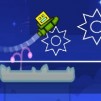
Geometry Dash Moonlight challenges your concentration and timing skills. Jump over deadly spikes, adapt to changing rhythms, and escape the endless night.
Geometry Dash Moonlight: Immerse yourself in a nighttime adventure
Geometry Dash Moonlight is a rhythm-based adventure level set in a mysterious nighttime setting. In it, you control a square block, navigating obstacles and synchronizing your movements with the music to reach the final destination under the moonlight. Additionally, you can play easier challenges like Egg Dash to achieve higher scores.
Gameplay rules:
- Tap or press a key to jump and avoid obstacles such as spikes, columns, and traps.
- A single collision results in failure, requiring you to restart the level.
- Precise timing with the music is crucial to complete the level.
- There are no scores; the only goal is to finish the level.
- Observe the environment carefully, as some obstacles may appear unexpectedly.
How to play Geometry Dash Moonlight
Character controls
- Control the character by clicking the mouse or pressing a key to perform a jump.
- The character moves automatically and continuously, so you need to focus entirely on the timing of your jumps.
- Each obstacle, such as spikes, tall columns, or hidden traps, is arranged in time with the music.
Effective level completion strategies
- Don't try to play too fast; learn to memorize the location of obstacles after each failure.
- When encountering difficult sections, pay attention to changes in the background and moonlight, as they often signal impending danger.
- Maintain a calm mindset, adjust your timing to the music, and gradually you will conquer the level steadily.
Obstacles in Geometry Dash Moonlight
- Spikes: The most common obstacle. Even a slight touch results in immediate failure, requiring precise timing.
- Columns and tall blocks: These blocks block the path, forcing the player to jump at the correct height and time.
- Hidden traps: Some traps don't appear immediately, only revealing themselves when approached or in time with the music, easily catching players off guard.
- Changing terrain: The ground may rise, fall, or disappear in time with the rhythm, requiring quick reflexes.
- Moving obstacles: Objects moving horizontally or vertically disrupt the familiar rhythm and increase the difficulty.
- Distracting effects: Changing lights, dynamic backgrounds, and colors make it harder to focus on the path.